Choosing the right reliability tests is not simply about selecting a test standard or running a product through a climatic chamber.
It starts with understanding the product, its operating environment, and the failure mechanisms that could affect its performance throughout its intended life cycle.
Without proper planning, manufacturers risk over-testing — increasing costs and development time — or under-testing, which can lead to unexpected field failures and warranty claims.
Before finalizing a reliability test plan, consider these six essential steps:
1. Define the Mission Profile
- Understand how and where the product will operate throughout its intended life cycle.
Consider:
• Temperature and humidity exposure
• Electrical operating conditions and power cycles
• Vibration, mechanical shock, and physical stress
• Chemical exposure, corrosion, and environmental contaminants
• Expected operating hours, duty cycles, and storage life
2. Identify Applicable Standards
Determine which industry standards and customer specifications apply to your product.
Examples include:
- AEC-Q100 / Q101 / Q200 — Automotive ICs, discrete semiconductors, and passive components
- IEC 60068 — Environmental testing
- ISO 16750 — Environmental conditions and testing for automotive electrical and electronic equipment
- MIL-STD-810 / MIL-STD-883 — Environmental testing and microelectronic device testing
- JEDEC JESD22 / JESD47 — Semiconductor reliability testing and qualification
3. Conduct Risk and Failure Mode Analysis (DFMEA)
Identify potential failure mechanisms based on the product’s design, materials, and packaging.
Examples:
- Thermal cycling → Solder fatigue and package delamination
- High temperature and humidity → Corrosion and moisture-related failures
- High Temperature Operating Life (HTOL) → Semiconductor degradation and electrical parameter drift
The objective is to select tests that target the actual risks, rather than simply conducting every available test.
4. Establish Acceleration Factors and Test Models
Accelerated testing helps evaluate reliability within a practical development timeframe.
Depending on the failure mechanism, relevant models may include:
- Arrhenius Model — Temperature-dependent degradation
- Coffin–Manson Model — Thermal fatigue caused by cyclic strain
- Peck’s Model — Temperature and humidity acceleration for moisture-related degradation
Selecting the correct model and assumptions is essential when relating laboratory results to expected field performance.
5. Define Pass/Fail Criteria and Sample Sizes
Before testing begins, establish measurable acceptance criteria.
Consider:
- Functional performance and electrical parameter limits
- Leakage current, supply current, and parametric drift
- Physical inspection and delamination criteria
- Sample size, allowable failures, and statistical confidence
Clear criteria help ensure that test results are meaningful and aligned with the product’s qualification objectives.
6. Verify Equipment Capabilities and Test Readiness
Even a well-designed test plan can fail to deliver meaningful results if the equipment or test setup is unsuitable.
Before testing, verify:
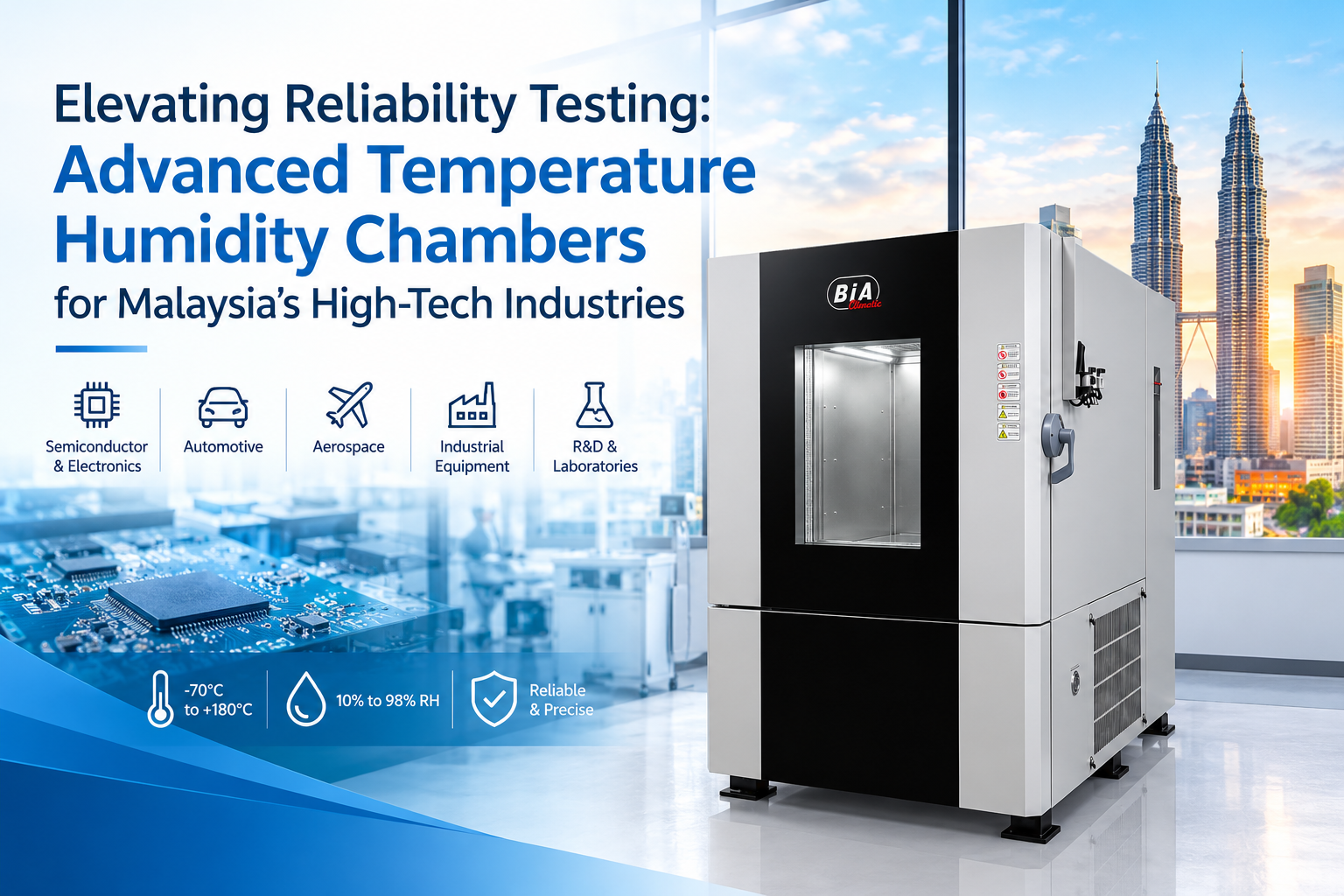
- Chamber temperature range, humidity control, and ramp rates
- Power supplies, bias systems, fixtures, and load boards
- In-situ monitoring versus scheduled electrical read-points
- Baseline electrical testing and pre-stress inspections, such as CSAM or X-ray where applicable
- The test system must be capable of reproducing the required stress conditions reliably and safely.
The Key Takeaway
Reliability testing should begin with the product’s mission profile, failure mechanisms, and qualification objectives — not simply a list of test standards.
A structured approach helps manufacturers develop more effective test plans, optimize qualification costs, and reduce the risk of field failures.
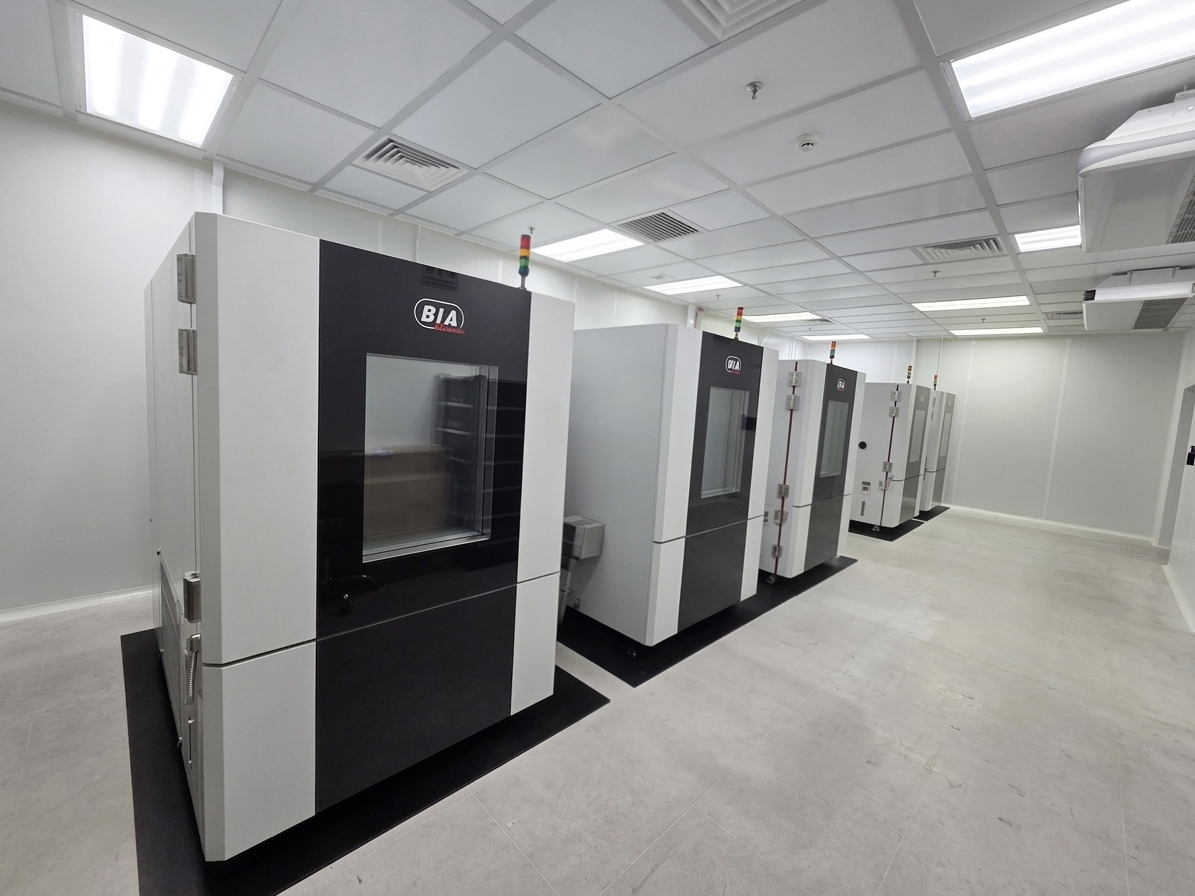
At MicroRel Solution, we support reliability testing requirements with environmental simulation solutions, including temperature and humidity chambers, thermal cycling systems, and customized testing solutions for semiconductor and high-tech industries.